Zhongxin Display - Professional high-end showcase R&D manufacturer.
 +86 18933315455
 info@gzzxdisplay.com
Zhongxin Display - Professional high-end showcase R&D manufacturer.
+86 18933315455 info@gzzxdisplay.com

In the jewelry retail industry, store layout is not only an aesthetic consideration, but also a key factor that affects customer experience, sales efficiency and brand image. A well-designed store layout can guide customers' shopping paths, maximize product display, and increase purchasing desire. This article will explore the four main layout types commonly seen in jewelry retail stores: grid, free-flow, boutique counters, and corridors.
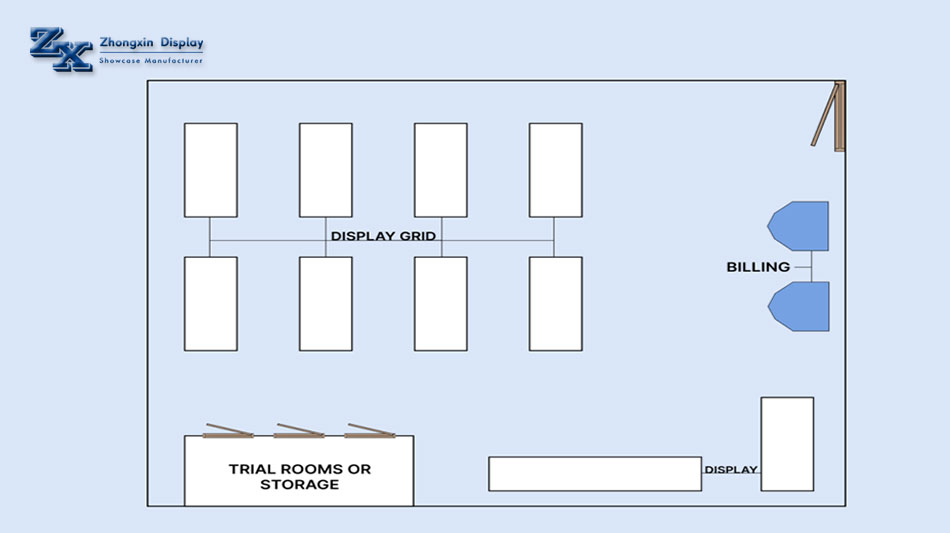
1. Grid layout
The grid layout is the most common layout method in retail stores, especially in large shopping malls or department stores. This layout uses straight lines and passages to form a grid-like path, allowing customers to browse the entire store in a systematic way.
Advantages: The biggest advantage of the grid layout is its clear structure and easy navigation. Customers can browse the displayed products one by one along a fixed path, reducing the possibility of getting lost. This layout also facilitates retailers to manage inventory and sort products, ensuring that all products are evenly displayed.
Disadvantages: The grid layout may give people a feeling of being too rigid and formulaic, lacking creative and personalized elements, and it is difficult to visually attract customers. In addition, this layout may appear too crowded and inflexible in a small jewelry store.
A grid layout is best suited for large jewelry retailers, especially those that offer a wide range of product offerings. It ensures that every product is visible to customers and simplifies the browsing process for customers.
2. Free-flow layout
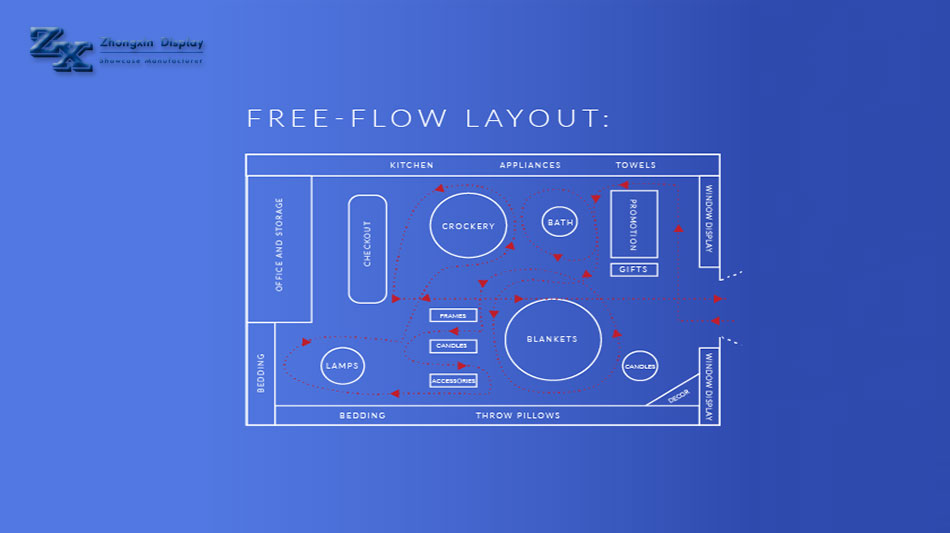
A free-flow layout emphasizes openness and flexibility, with no fixed aisles or routes. This layout allows customers to move freely around the store and browse the jewelry on display at will.
Advantages: A free-flow layout provides customers with a more relaxed and unstructured shopping environment. This layout is usually more visually appealing because it allows retailers to use creative displays to attract customers' attention. In addition, a free-flow layout helps create a unique brand atmosphere, allowing each store to show its own personality.
Disadvantages: This layout may cause customers to get lost, especially in larger stores. Due to the lack of a fixed route, customers may miss certain display areas. In addition, a free-flow layout may also face challenges in inventory management and security.
A free-flow layout is particularly suitable for high-end jewelry stores that emphasize brand experience and visual appeal. It creates an environment for customers to explore and discover, which helps to enhance the uniqueness of the brand and the shopping experience of customers.
3. Boutique counter layout
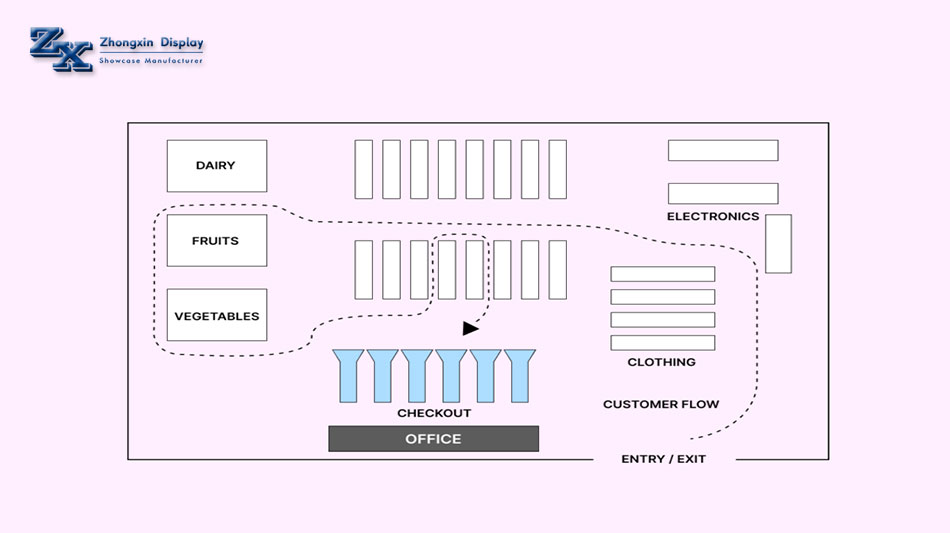
The boutique counter layout is the first choice of many high-end jewelry stores. It divides jewelry products into different special areas or counters, each of which displays a specific type of product or a specific brand.
Advantages: This layout method helps to highlight the unique value of each brand or product line and enhance the customer's shopping experience. By classifying jewelry products into their respective special areas, customers can easily find the products they are interested in. In addition, the counter layout provides jewelry stores with more display and decoration opportunities, allowing each area to show its unique charm.
Disadvantages: The boutique counter layout may take up a lot of space and is not very suitable for small jewelry stores. It may also cause customers to be confused when moving between special areas, especially when the layout is too complicated.
This layout is best suited for high-end jewelry stores that want to enhance the shopping experience by emphasizing different brands or product lines. It provides customers with an organized shopping environment while also helping to convey the brand story.
4. Corridor layout
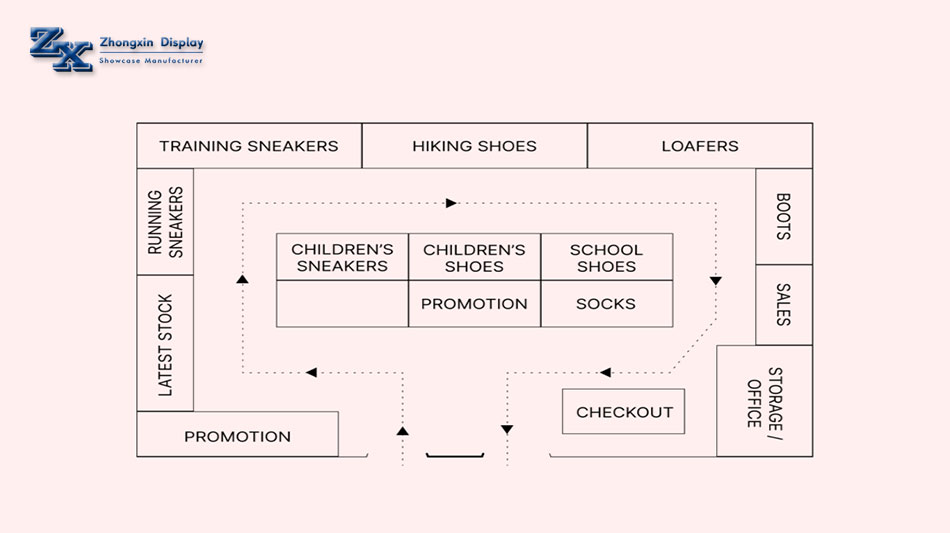
The corridor layout is a layout method that emphasizes the central aisle and side display areas. Customers can walk along the center aisle, with various jewelry products displayed on both sides.
Advantages: The biggest advantage of the corridor layout is its smooth customer flow. Customers can easily browse the products on both sides, ensuring that no display area is overlooked. The corridor layout also provides a central display area for jewelry stores, which is suitable for displaying special promotions or popular products.
Disadvantages: This layout may limit the overall design flexibility of the store because the central aisle needs to remain unobstructed. In addition, the corridor layout may make customers feel a little monotonous and lack the fun of exploration when shopping.
The corridor layout is most suitable for medium and large jewelry stores, especially those that want to maximize the use of display space and maintain customer flow. It provides customers with an efficient and convenient shopping experience.
The layout design of a jewelry retail store is crucial to its operational success. From the systematic display of the grid, to the open experience of the free-flowing style, to the exquisite display of the boutique counter style, and the smooth passage of the corridor style, each layout has its unique advantages and applicable scenarios. When choosing a layout, jewelry retailers should consider factors such as the store's area, target customer groups, brand positioning and product variety. By choosing the right layout, jewelry stores can not only enhance customer experience, but also significantly increase sales performance and brand influence.
If you have any questions or need the latest catalogue,
please contact us.We will reply to you within one hour during working hours.
CONTACT US
 WeChat:+86 18933315455
 Address:Room 101, Building 4, No.27 Nanhetang Street, Huadu District, Guangzhou
 |  |  |  |  |  |  |